
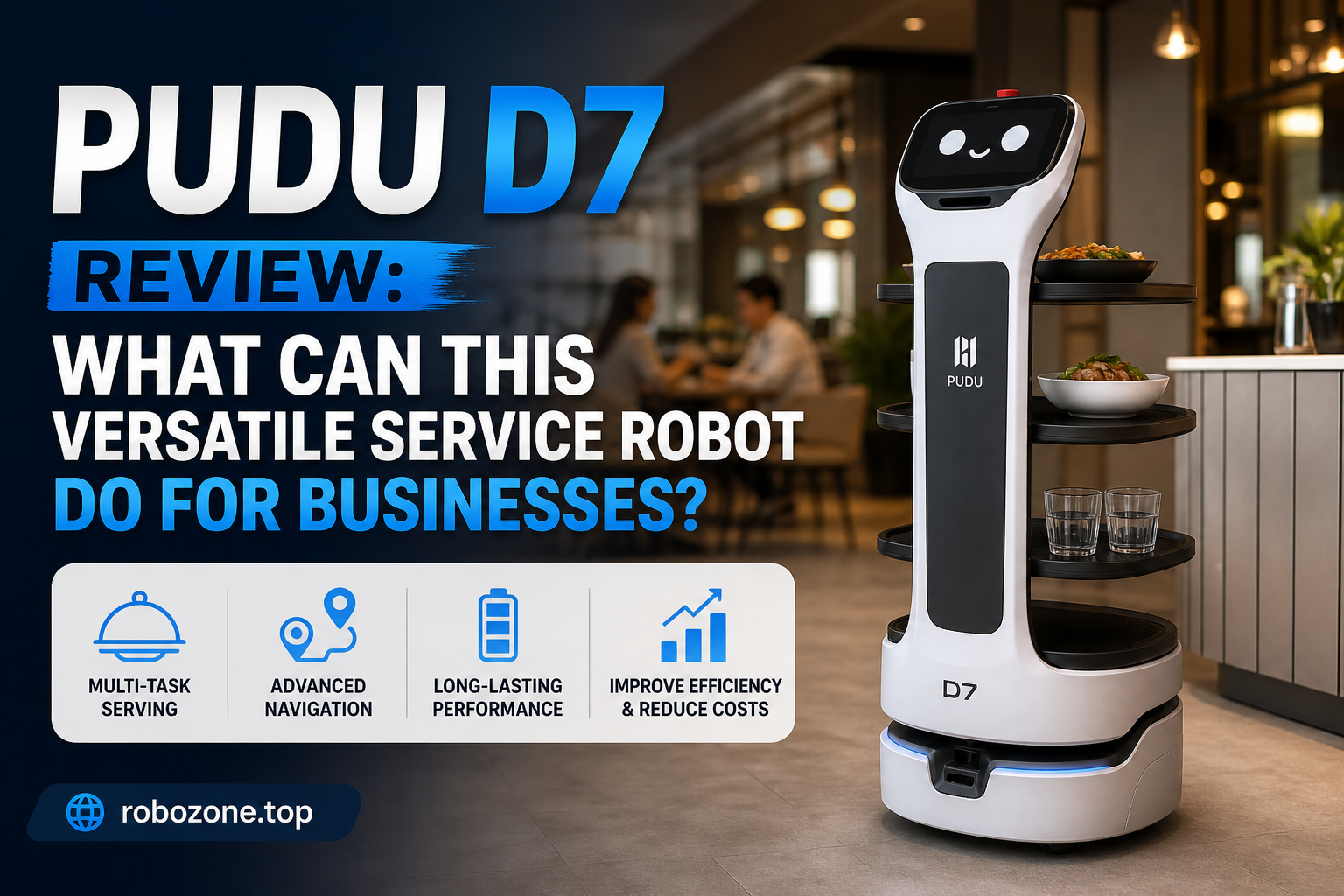
In a world captivated by the promise of robotics, the Pudu D7 emerges as a compelling player in the service robot arena. An embodiment of cutting-edge technology and practical design, this versatile service robot is making waves across multiple industries. As we explore the breadth of its capabilities, real-world applications, and where it might take us next, we provide a detailed analysis that is both informative and engaging. What follows is an exploration of the Pudu D7, a journey into the heart of what makes it both a marvel of modern engineering and a harbinger of what’s to come.
What Is the Pudu D7?
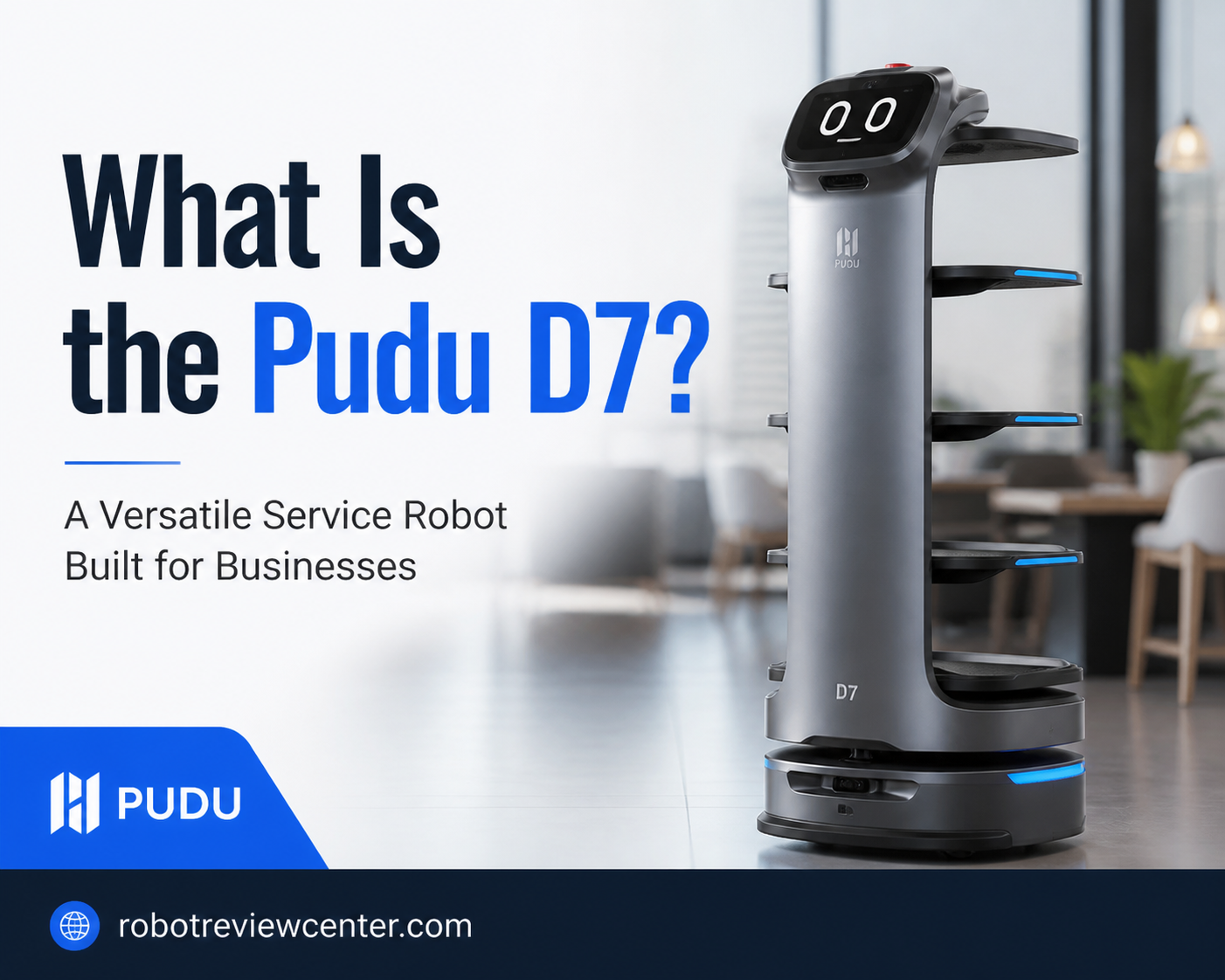
The Pudu D7 is a service robot designed specifically for interaction with both objects and people, primarily targeted at enhancing operational efficiency in hospitality, healthcare, and beyond. Manufactured by Pudu Robotics, renowned for its advanced robotics solutions, the D7 model integrates sophisticated AI with functional design, aiming to bridge the gap between robotic capabilities and human needs. The genesis of the Pudu D7 is a direct response to growing demands for service automation in commercial establishments, proving itself to be both an asset and a game-changer in its fields of operation.
Standing at the cusp of innovation, the D7 boasts features tailored to enhance its usability in workplaces. Its incorporation of intuitive navigation, seamless interaction protocols, and a robust body design are but a few highlights of its technical prowess. At its core, the Pudu D7 is conceptualized as an enabler—a robot that empowers businesses to do more with less while maintaining high standards of service delivery.
Technical Identity and Exact Generation
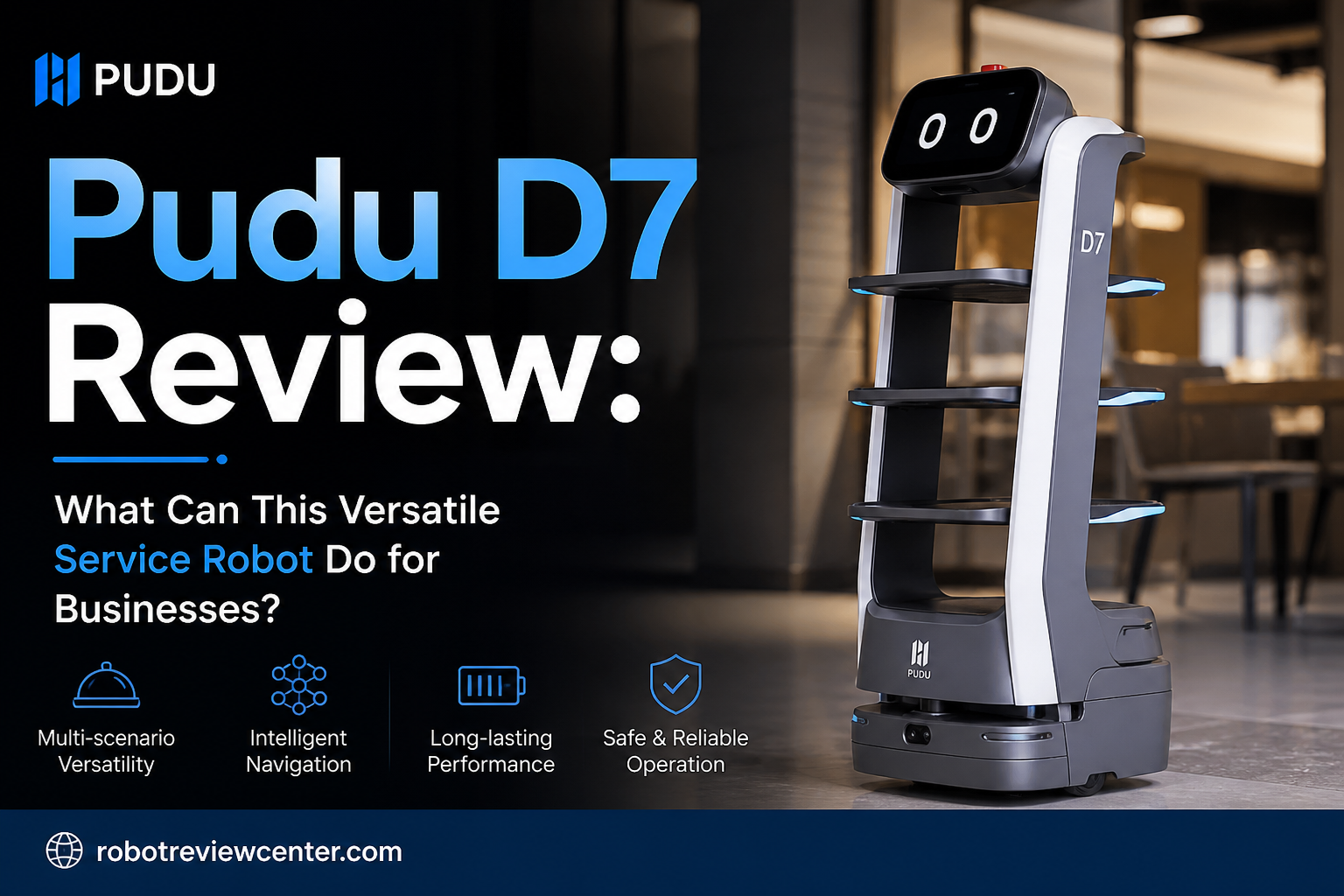
As we delve into the specifics, the Pudu D7 stands out not only with its aesthetic elegance but with its technological backbone. Created by Pudu Robotics, a pioneer headquartered in Shenzhen, China, the D7 represents the latest generation of service robots in the company’s repertoire.
Its specifications are defined by modern engineering: a balanced amalgam of hardware and software integrating a rich suite of sensors, including stereo cameras and LiDAR for real-time environmental mapping, SLAM (Simultaneous Localization and Mapping) algorithm, and obstacle avoidance. The precision of its navigation capability is ensured by a robust compute system leveraging NVIDIA’s advanced processing units, enabling real-time decision-making and path planning in dynamic environments.
What truly sets the Pudu D7 apart is its adaptability, offering a versatile platform that can be customized to meet specific industry requirements. Its lineage is a testament to Pudu Robotics’ unwavering commitment to continuous improvement and performance optimization.
Capabilities and Real-World Applications
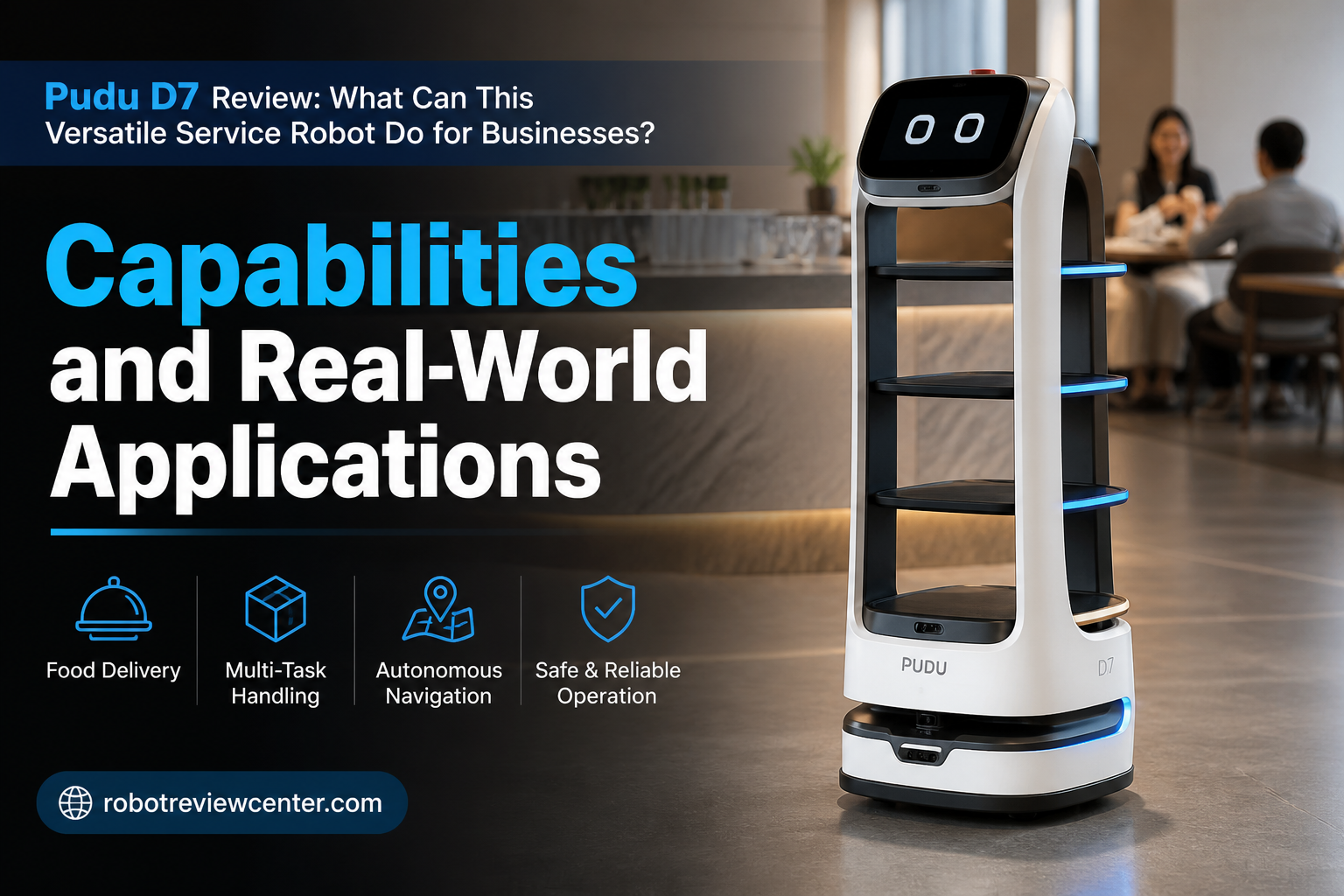
Where the Pudu D7 truly excels is in its applicability across a diverse range of industries. As service environments evolve, the demand for robotics solutions like the D7 accelerates. Predominantly used in restaurants and hotels for tasks such as dish delivery and guest interaction, the D7 contributes to streamlining operations and providing enhanced customer experiences. Here, it acts as a waiter, a concierge, or even a room service attendant—a multitasker that never tires.
In healthcare, the environment shifts but the goals remain consistent. The D7’s design supports the delivery of medications and supplies within hospital wards, optimizing workflows for medical staff and allowing them more time to focus on patient care. With such versatile applications, Pudu D7 is not just about efficiency—it’s about redefining service delivery in 21st-century workplaces.
Brain and Compute
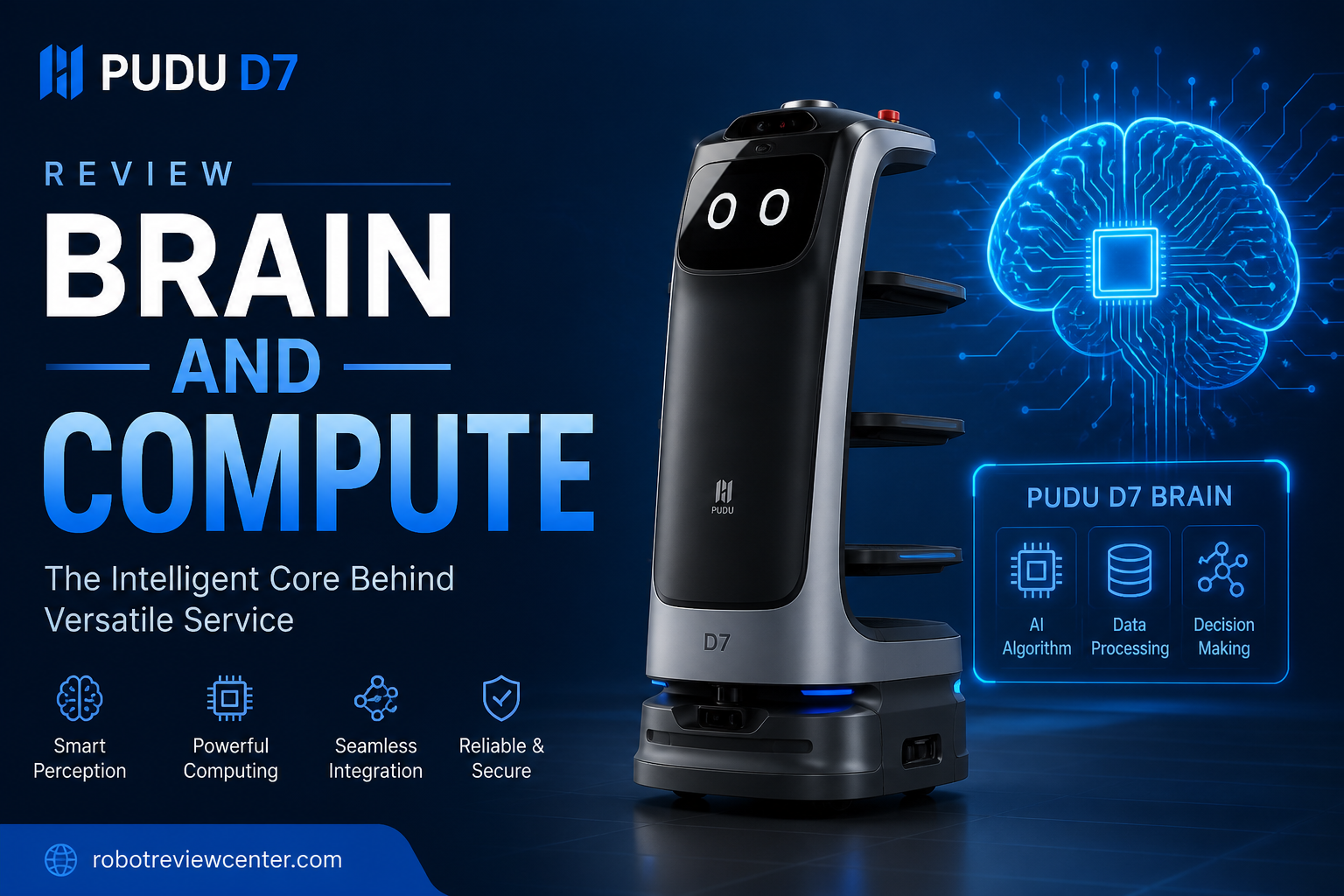
The brain of the Pudu D7 is its computing unit, powered by NVIDIA’s chipset, which ensures it processes inputs with speed and accuracy. This capacity enables the robot to undertake complex computations necessary for real-time navigation and interaction. NVIDIA’s AI platforms are instrumental in powering the machine-learning models that help the Pudu D7 understand its environment and adapt its functions accordingly. The robot harnesses the powers of spatial computing and intelligent algorithms to automate tasks typically reserved for human labor, showcasing its advanced capability in speech recognition and multimodal interaction.
Moreover, its CPU and GPU combination supports the execution of structured AI models that facilitate the robot’s autonomy and machine learning capabilities, aiding in decision-making processes that are integral to its operation in multifaceted environments.
Vision and Spatial Intelligence
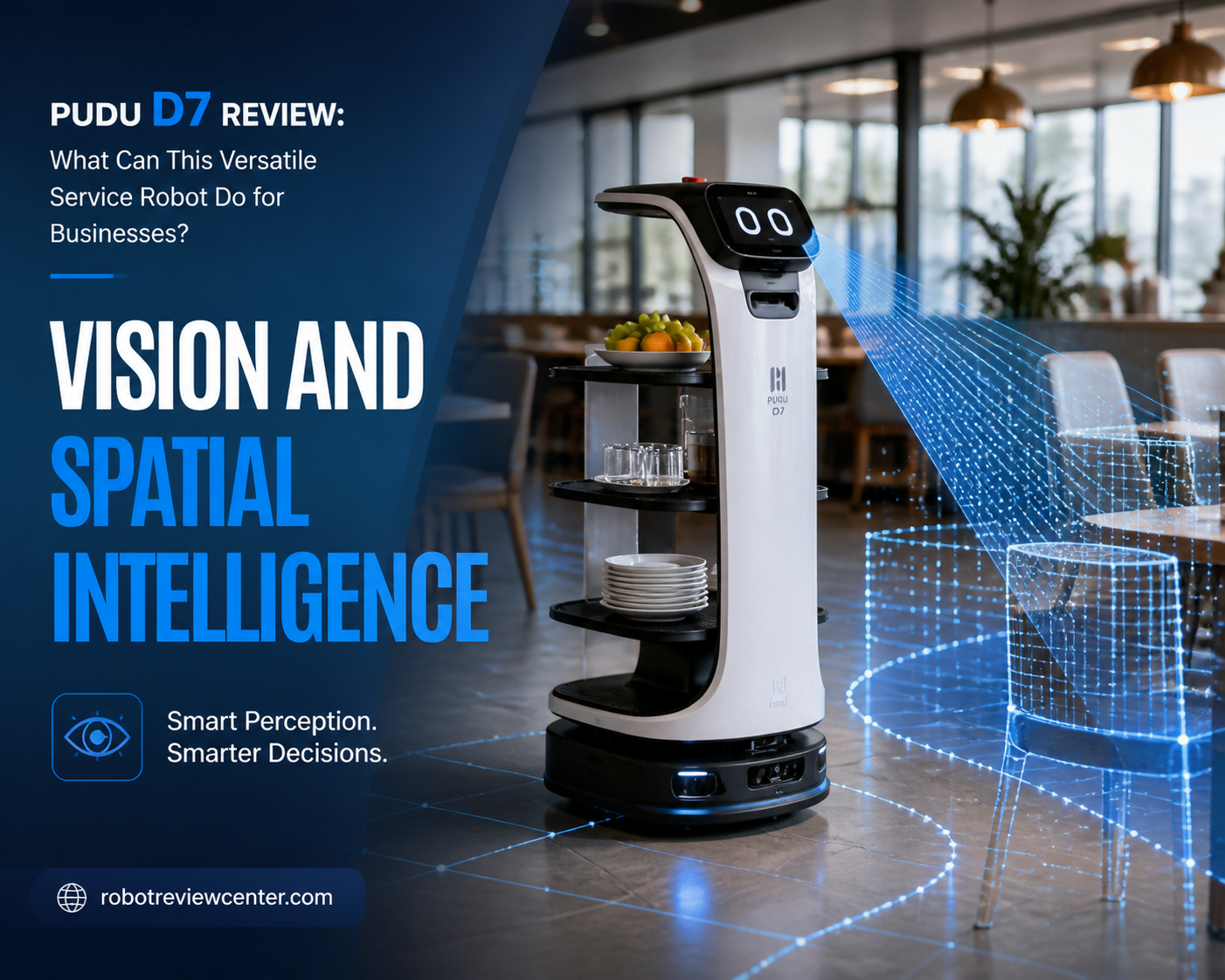
Key to the Pudu D7’s success is its impeccable vision system. Equipped with stereo cameras and depth sensors, the robot can effectively scan its surroundings and generate 3D maps for safe navigation in crowded settings. The integration of LiDAR enhances its spatial awareness, allowing it to perform real-time adjustments and avoid obstacles with precision. Cultivated for intelligence, these features grant it the ability to adapt to complex environments, whether maneuvering through bustling restaurant floors or navigating healthcare facilities.
The AI processing units dovetail with its spatial intelligence, fundamentally elevating how it perceives the world around it. This ability to interact with its environment forms the bedrock of the D7’s operational capacities, driving forward possibilities of human-robot collaboration.
Mobility and Interaction
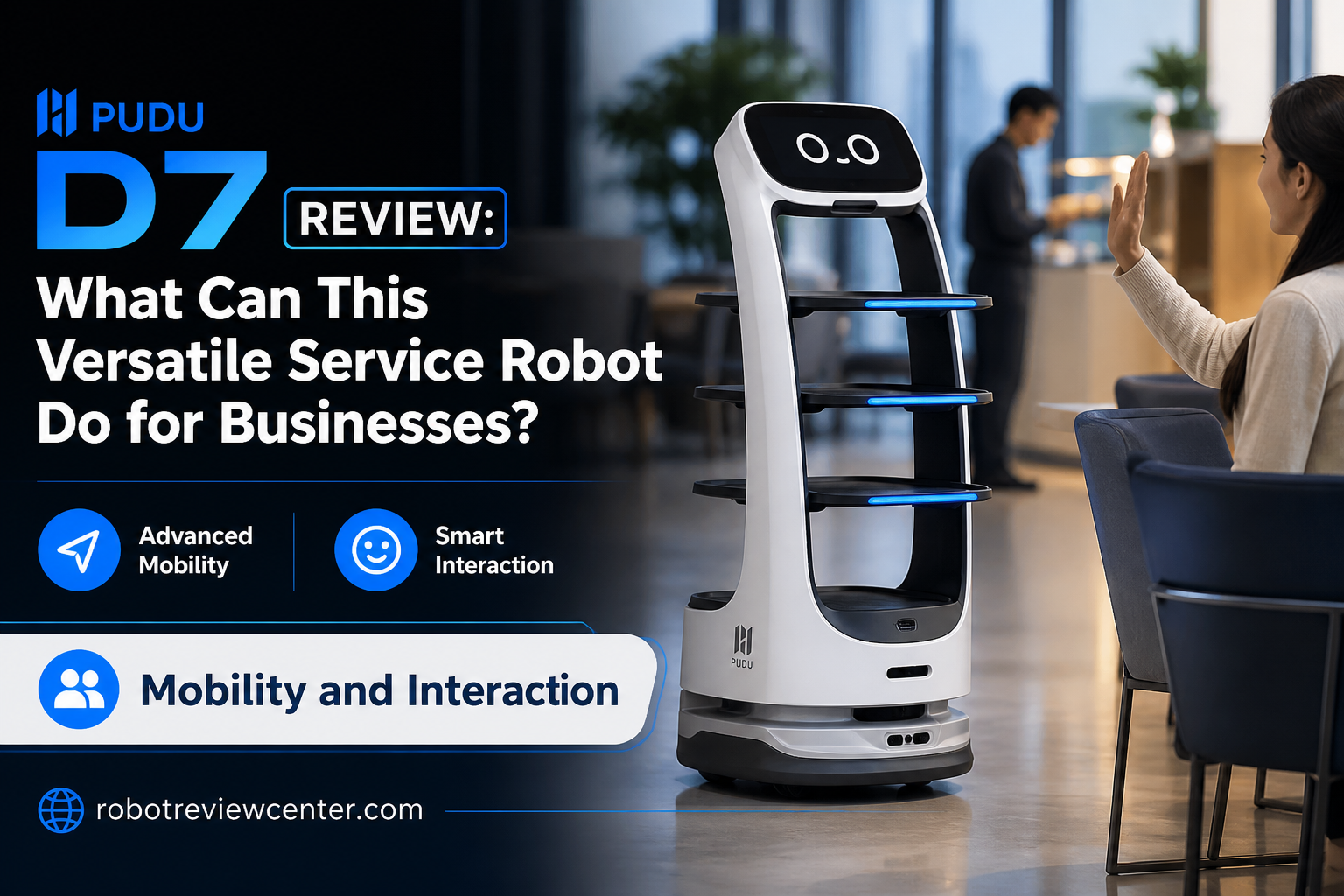
Behind the seamless operation of the Pudu D7 lies its meticulously engineered mobility system. The robot is equipped with a stable motor system enabling smooth and consistent movement, crucial for high-pressure environments like busy corridors. Pudu D7’s mobility is augmented by a series of sensors that fine-tune its motion dynamics to overcome barriers and adapt to varying terrains, embodying a gentle prowess in movement that enhances its user interaction capabilities.
It goes beyond basic utility, as the D7 also interacts with users through expressive LED display panels, incorporated voice recognition software, and speech synthesis systems, establishing intuitive two-way communication aiding in tasks ranging from guidance to product information dissemination. Its ability to interact with finesse and efficiency marks it as a milestone in service robot development.
Autonomy and AI Architecture
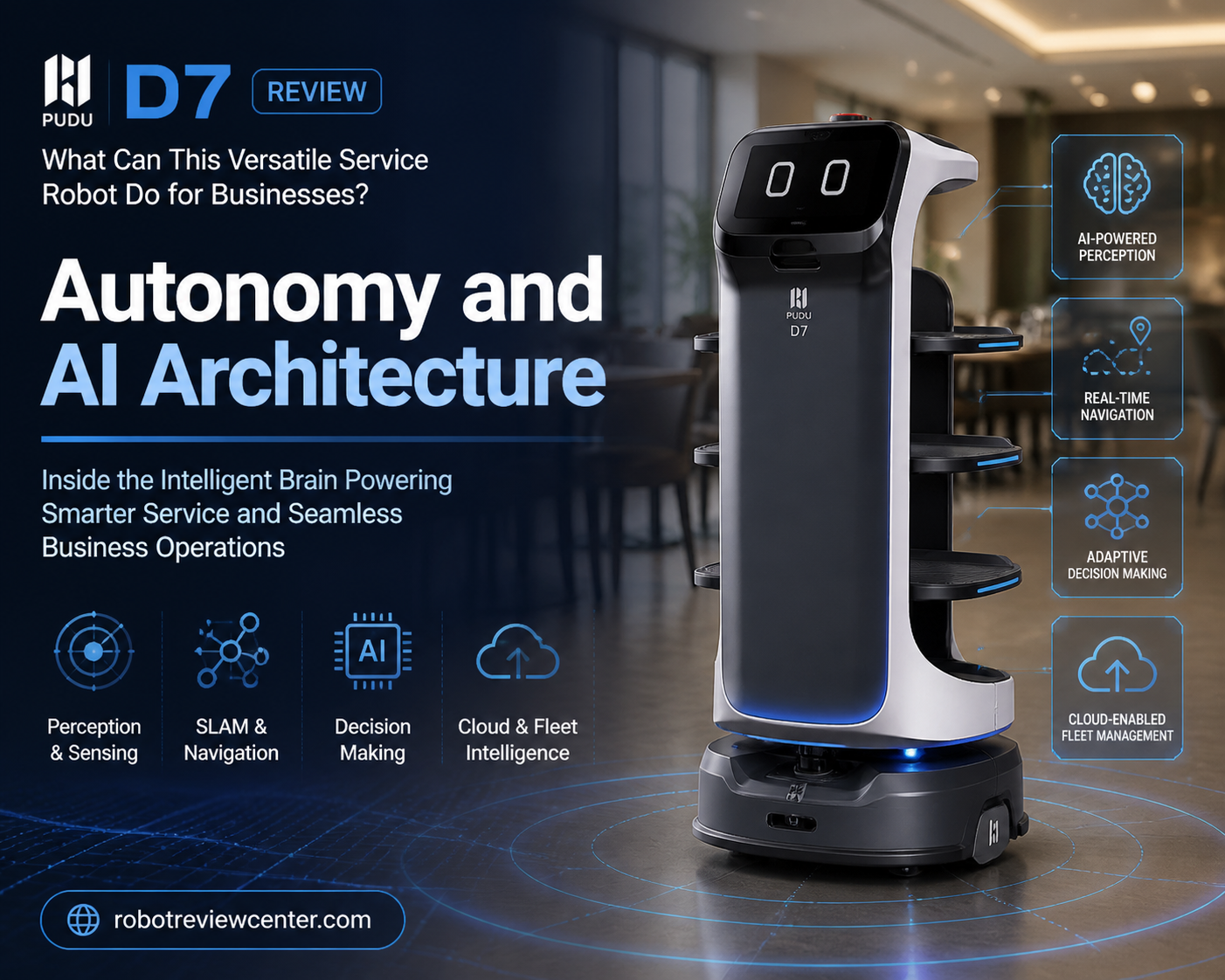
In robotics, autonomy is a prized capability, and the Pudu D7’s AI architecture underpins its autonomous nature. Driven by intelligent algorithms, the D7 demonstrates decision-making independence in executing pre-specified tasks and overcoming unprecedented scenarios. Artificial intelligence models employed in the robot provide it with a level of understanding that enables it to learn and improve continually, driving its performance towards near-human decision-making quality.
While its autonomy is significant, Pudu D7’s AI architecture is also characterized by a balance between onboard processing and cloud computation. This integration augments its ability to handle large datasets and sophisticated AI-driven operations smoothly, reflecting a synthesis of computational efficiency and operational pragmatism.
Challenges and Limitations
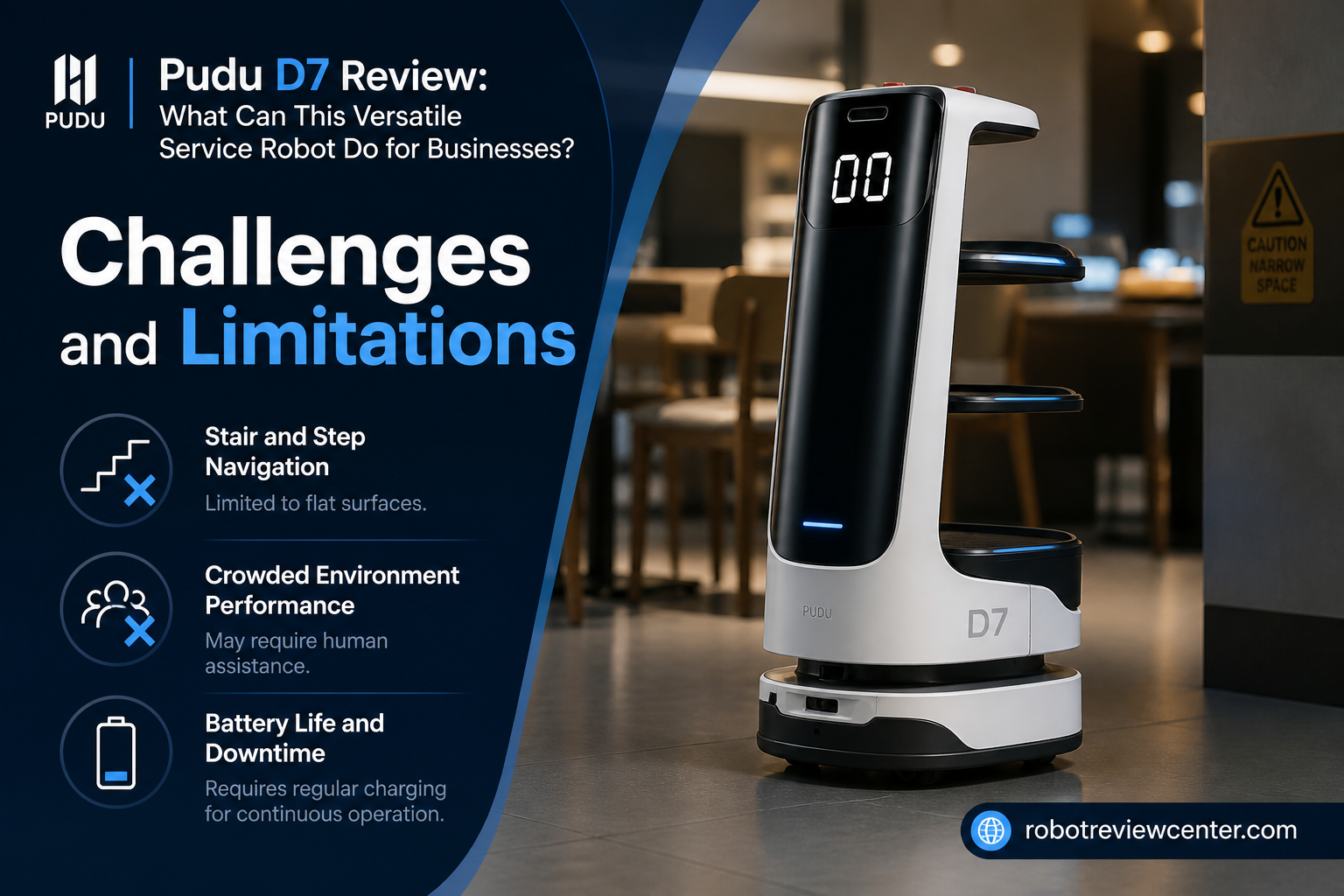
No discussion about service robots would be complete without addressing the challenges and limitations inherent in their design and function. The Pudu D7, while versatile, is bound by its operational scope. Its effectiveness, largely dependent on technological ecosystems and integration with broader IT infrastructures, presents challenges for deployment in environments not optimized for robotic interaction.
Furthermore, although its AI enables complex interactions, there remain areas where human oversight remains crucial. The intricacies of human emotions and unexpected environmental variables continue to pose challenges that today’s AI, including that of the Pudu D7, must still learn to manage seamlessly. This leaves room for improvement in elements of machine learning and emotional intelligence, key areas for future iterations.
Future Perspectives
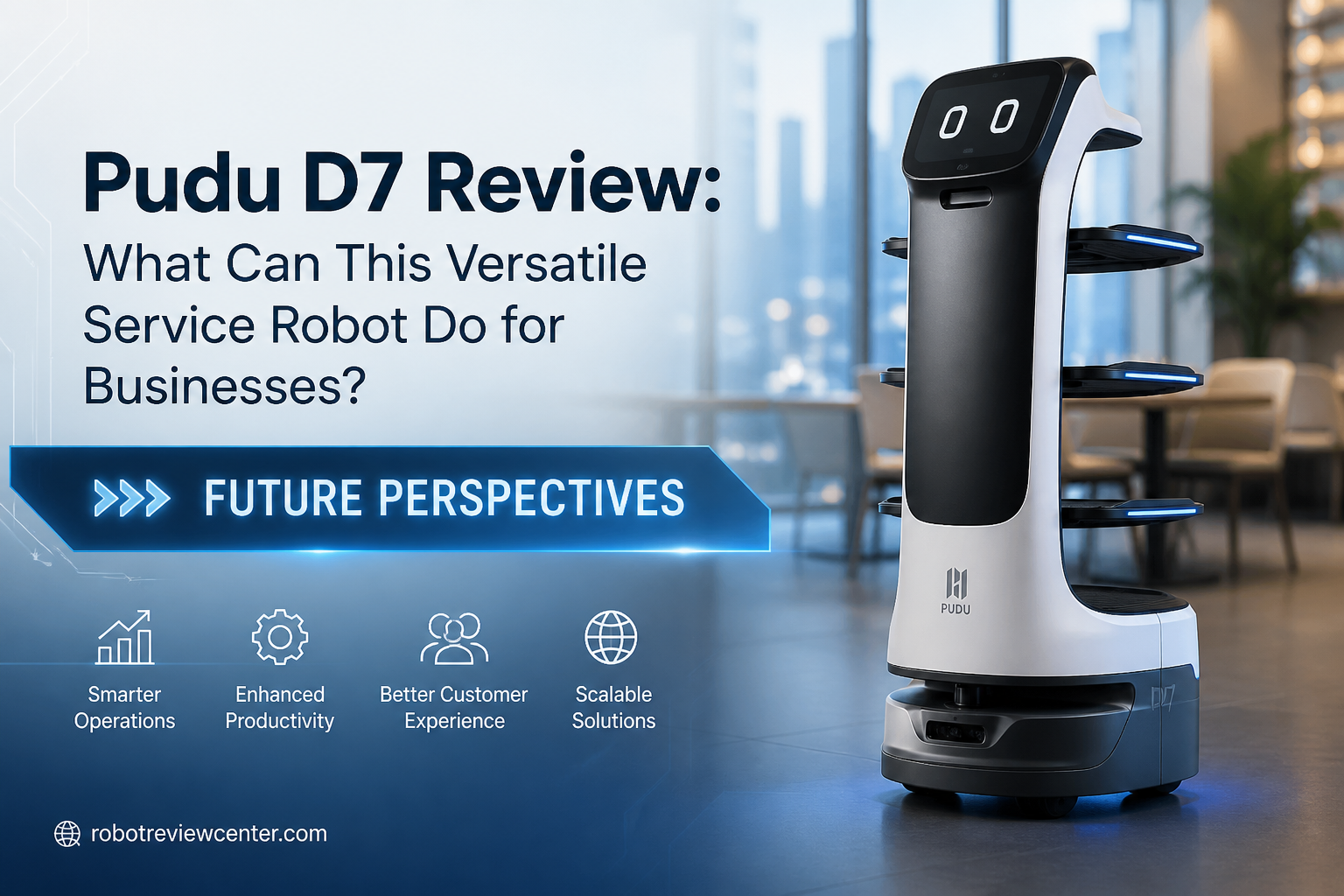
Looking forward, the trajectory for service robots like the Pudu D7 is one of profound potential. The next five years could see significant advancements in sensor technology, AI sophistication, and seamless human-robot integration. Pudu Robotics, alongside key industry actors, is poised to extend the boundaries of what service robots can achieve.
This evolution will likely involve more nuanced emotional intelligence, allowing robots to function even more naturally in human environments. As AI processing power increases, and robots become more adept at learning from their environments, service robots will become indispensable tools in both the business and consumer realms. However, the journey towards achieving a synergy between machines and humans entails careful consideration of socio-economic impacts, ethical norms, and technological innovation, offering both exciting potential and challenges in equal measure.
So where does this leave us? As we glance over the horizon, the promise imbued in platforms like the Pudu D7 beckons myriad possibilities for the landscape of automated service delivery. The D7’s versatility and technical prowess exemplify the progressive strides made in robotics, marking significant milestones while hinting at untapped futures. For businesses embarking on robotics integration journeys, adaptability and readiness for technological advancement will be critical. Stakeholders must remain vigilant not only of the potentialities and promises of robots like the Pudu D7 but also of their evolving role in reshaping industries and human interactivity. As we continue to progress, the harmonization of human-robot relationships stands as both a challenge and an invitation—a call to redefine the operational frameworks that guide how tomorrow’s service industries will look.